Fast, Component-Driven Interfaces with React
A UI that feels slow or inconsistent costs you users before they even evaluate the product. We use React's component-based architecture and virtual DOM to build interfaces that stay fast and consistent as features get added, on the web and, via React Native, on mobile from largely the same codebase.
What React Gives Your Project:
- Reusable components that keep the UI consistent as you add features, instead of rebuilding similar screens from scratch each time
- Predictable rendering, so a change in one part of the interface doesn't produce unexpected side effects elsewhere
- Fast UI updates via the virtual DOM, keeping the interface responsive as data changes
- A shared codebase between web and mobile through React Native, cutting duplicate development effort
- A mature ecosystem (Redux, React Router, Next.js), so common problems already have proven solutions
- Straightforward performance tuning as the application scales, rather than a rewrite when traffic grows
- Reliable state management for applications with complex, interdependent data
- Faster onboarding for new developers, since JSX keeps component structure close to the HTML they already read
- Built-in developer tooling that shortens the debugging cycle during development
- Clean integration with existing APIs and backend services, including .NET

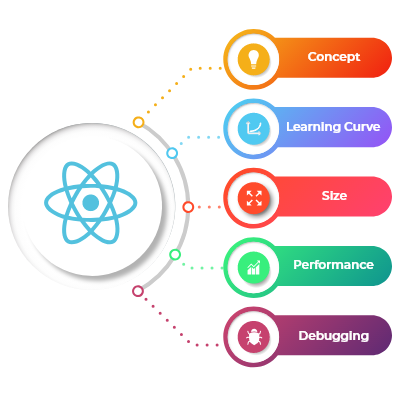
How We Build With React:
Component-Based Architecture : We break UIs into reusable, self-contained components, so a design change or bug fix happens in one place instead of being repeated across the codebase.
Virtual DOM for Real Performance : React only re-renders what actually changed, not the whole page — the practical result is an interface that stays responsive as it grows more complex, not slower.
Readable, Maintainable Code : JSX keeps component structure close to plain HTML, which means new developers on your project can ramp up faster and code reviews catch more.
Predictable State Management : Data flows one direction through the component tree, which makes bugs easier to trace to their source instead of chasing state changes across the app.
Declarative UI : We describe what the interface should look like, and React handles the DOM updates — fewer manual DOM bugs, and UI logic that's easier to reason about during a review.
Modern React (Hooks) : We build with function components and hooks, the current React standard, so your codebase stays aligned with where the ecosystem — and available React talent — actually is.
Server-Side Rendering : Where load time and SEO matter, we render React on the server first, so users and search engines see meaningful content immediately instead of a blank page while JavaScript loads.