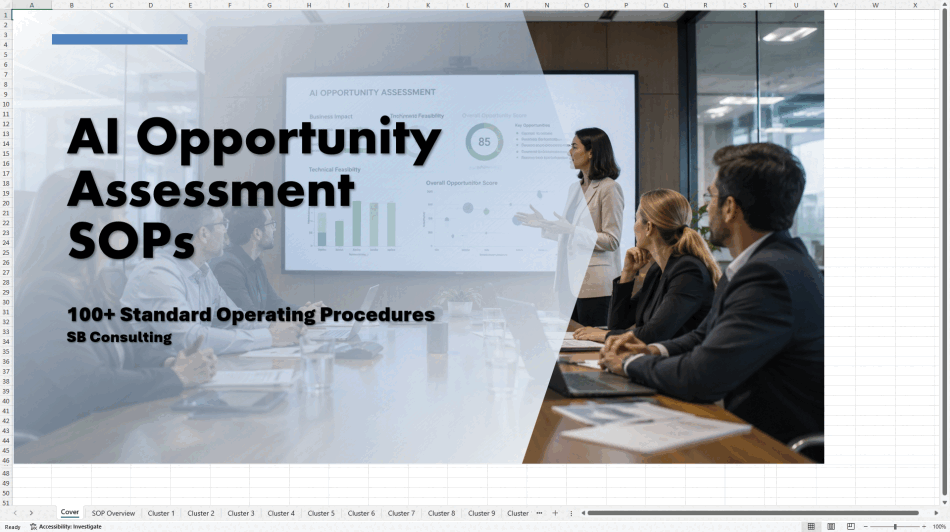
AI Opportunity Assessment

Every department has an idea for where AI could help. Not every idea is worth building. We help you find the use cases that are both valuable and achievable, instead of the ones that are just easiest to pitch in a meeting.

We walk your departments, score what we find against real feasibility and impact criteria, and hand you a backlog you can actually act on — not a wishlist that looks impressive but goes nowhere.

Whether you have too many competing ideas or too few, the goal is the same: find where AI creates value your business will actually feel.

How We Run the Assessment

1. Cross-Department Use Case Discovery: We interview stakeholders across operations, sales, support, and finance to surface where manual, repetitive, or judgment-heavy work is actually eating time.
AI Opportunity Assessment

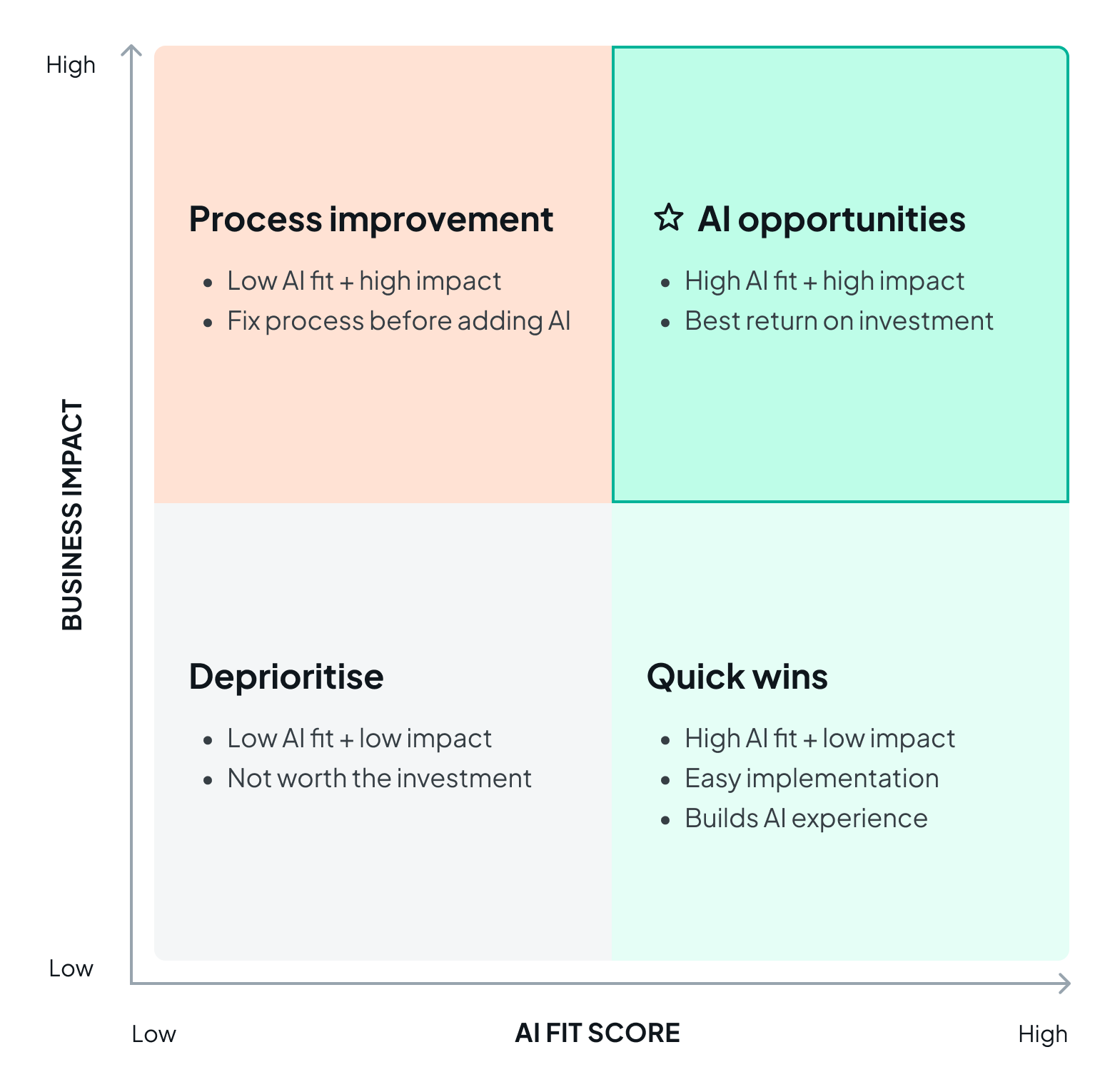
2. Feasibility Scoring: Each candidate use case gets scored on data availability, technical complexity, and integration effort — so you know upfront which ideas are a few weeks of work and which are a multi-quarter bet.

3. Cost/Benefit Analysis: We estimate the effort to build against the expected time, cost, or revenue impact, so every use case on the list has a number attached, not just a hunch.

4. Organizational Readiness Check: We flag which use cases have an owner ready to champion them and which don't — because the best-scoring idea still fails without someone accountable for it internally.

5. A Prioritized, Sequenced Backlog: You leave with quick wins separated from strategic bets, sequenced so early wins build momentum and budget for the bigger ones.

Why Choose Akantik for Opportunity Assessment?

The easiest AI use case to pitch is rarely the one that pays off. We push past the flashy demo idea to find where the actual leverage is.

Scoring, Not Guessing: Every use case is evaluated against the same criteria, so prioritization decisions are defensible, not based on whoever pitched loudest.

Built by People Who Also Deliver: Our feasibility scores come from engineers who've actually built these systems, not from a generic maturity-model template.

A Backlog You Can Start Executing Immediately: The output plugs directly into a proof of concept or implementation engagement, so momentum doesn't stall between assessment and delivery.

Too many AI ideas floating around and no way to rank them? Let's build a backlog that's actually worth acting on.

AI Opportunity Assessment

AI Opportunity Assessment - Frequently Asked Questions

Common questions about identifying and prioritizing AI use cases.

What is an AI opportunity assessment?

An AI opportunity assessment identifies and scores potential AI use cases across your business based on feasibility and expected impact, producing a prioritized backlog instead of a list of unranked ideas.

How is this different from an AI strategy assessment?

A strategy assessment looks at organization-wide readiness — data, infrastructure, governance. An opportunity assessment goes narrower and deeper: finding and scoring specific use cases. Many engagements combine both.

How do you score feasibility?

We score each use case on data availability, technical complexity, integration effort, and organizational readiness, then weigh that against expected time, cost, or revenue impact to rank the backlog.

What departments do you typically assess?

We commonly cover operations, sales, customer support, finance, and IT, but the assessment is scoped to whichever departments you want evaluated.

What happens after the assessment is done?

The prioritized backlog feeds directly into a proof of concept for the top-ranked use case, or straight into implementation if the use case is well understood and low-risk enough to skip a PoC.

Hire Us