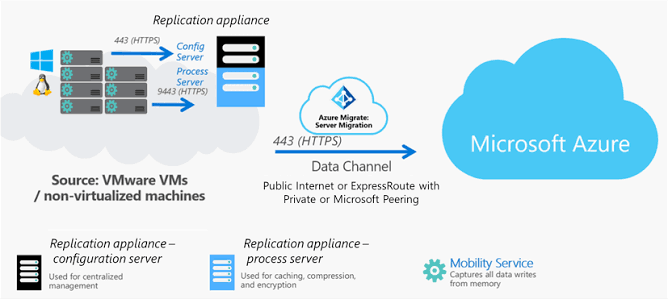
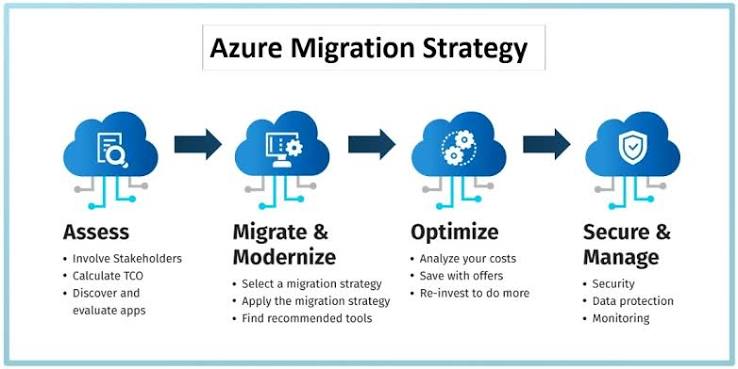
A migration that's rushed shows up as downtime, a broken integration, or a bill nobody planned for. We migrate applications and data to Azure against a plan built from an actual assessment of what you're running today — not a generic checklist.
Some workloads lift and shift cleanly. Others need re-architecting before they belong in the cloud. We tell you which is which before the migration starts, not after something breaks in production.
Whether you're moving off aging on-prem servers, another cloud provider, or a data center lease that's expiring, we plan the cutover around your business's tolerance for risk, not a fixed calendar date.
How We Run a Migration
1. Infrastructure and Dependency Assessment: Before anything moves, we map what each application depends on — databases, integrations, scheduled jobs — so nothing gets left behind or breaks silently on cutover day.
2. Lift-and-Shift vs. Re-Architecture: Some applications move as-is onto Azure VMs; others get more value from a redesign onto managed services first. We size up which path is faster and cheaper for each workload instead of defaulting to one approach for everything.
3. A Cutover Plan With a Rollback: Migration windows are scheduled around your traffic patterns, with a tested rollback path in case something doesn't go as planned — so a migration issue is a delay, not an outage.
4. Data Migration Without Data Loss: Databases and file stores move with validation steps that confirm what landed in Azure matches what left the source — not a copy job you have to trust blindly.
5. Post-Migration Tuning: Once workloads are running on Azure, we monitor performance and cost for the first weeks and adjust sizing — because the environment that looked right in planning rarely matches real traffic on day one.
Why Choose Akantik for Azure Migration?
Most migration horror stories trace back to skipping the assessment step. We don't move anything until we know exactly what it depends on and what breaks if it goes down.
Migrations Planned Around Your Risk Tolerance: A batch reporting job and a customer-facing checkout flow don't get the same cutover plan — we scope the approach to what the workload can actually afford to risk.
Experience Across Stacks, Not Just .NET: We've migrated Windows, Linux, and mixed-stack environments onto Azure, so an unfamiliar dependency doesn't stall the project mid-way.
We Stay Through Stabilization: Support doesn't end at cutover — we stay on through the first weeks of real traffic to catch what only shows up under production load.
Still running on infrastructure you've outgrown or a lease that's expiring? Let's plan the move to Azure.
Common questions about moving applications and data to Microsoft Azure.
Timelines depend on the number and complexity of applications being migrated.
Akantik provides a timeline after the assessment phase, not before.
Lift-and-shift moves an application to Azure VMs largely as-is — faster, but doesn't take advantage of managed services.
Re-architecting redesigns the application around Azure-native services like App Service or Functions — takes longer, but often reduces long-term operating cost.
For most applications, we schedule a migration window during low-traffic periods and use data synchronization to minimize downtime to minutes rather than hours.
Zero-downtime migration is possible for some architectures using parallel-run and traffic-cutover strategies.
Yes, we handle cross-cloud migrations from AWS, Google Cloud, or other providers to Azure, mapping equivalent services and re-architecting where a direct equivalent doesn't exist.
Every migration plan includes a tested rollback path so traffic can be redirected back to the source environment if an issue is found.
We validate the rollback before cutover, not during an incident.