Digitize Complex Operations with ERP Built Around Your Workflows
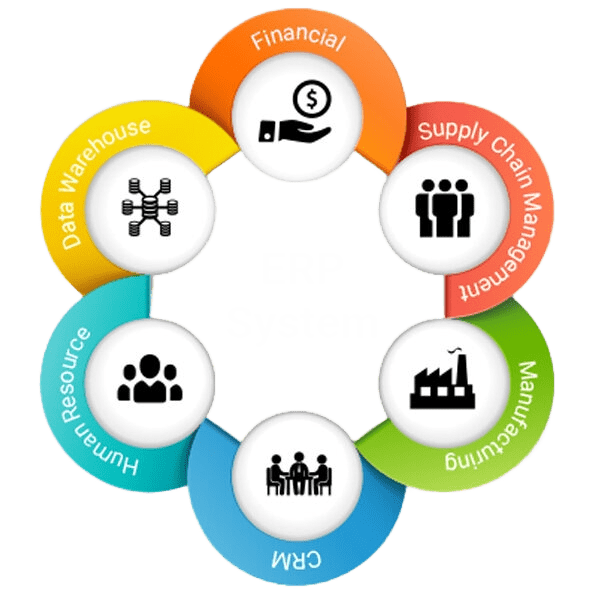
Spreadsheets and disconnected tools stop scaling long before the business does. We build Enterprise Resource Planning (ERP) systems tailored to your actual processes — financials, supply chain, inventory, and day-to-day operations — in one integrated platform, instead of a one-size-fits-all system you have to work around.
Our implementation team deploys modern ERP platforms that improve process accuracy, boost productivity, and provide real-time visibility across the organization — so you can operate smarter and scale without operations becoming the bottleneck.
Key Features and Capabilities
Built Around How You Already Operate
-
Fits Your Process, Not the Reverse : Off-the-shelf ERP forces you to restructure how your team works around the software. We design the system around your existing processes, so adoption doesn't mean re-training everyone on a new way of doing their job.
-
Costs You Can See Coming Down : When supply chain and production data live in one system instead of scattered spreadsheets, the waste — duplicate orders, overstocked inventory, manual reconciliation — becomes visible and fixable.
-
Grows Without a Rebuild : A system sized for your team today shouldn't need to be replaced the moment you add a second warehouse or a new business line — we architect for the scale you're growing into.
-
Decisions Backed by Real Numbers : When financials, inventory, and operations report from the same live data, "what does the business actually look like right now" stops being a question that takes a week to answer.
One Place for Your Business Data
-
No More Conflicting Numbers : When finance, sales, and operations each keep their own version of the truth, reports disagree. A centralized platform means everyone is looking at the same data.
-
Answers Without Waiting on a Report : Real-time reporting means you're not asking someone to pull numbers together before a meeting — the dashboard already has them.
Less Manual Work, Fewer Errors
-
Automated, Not Re-Keyed : Processes that currently depend on someone manually moving data between systems get automated, cutting the errors that come with manual re-entry.
-
Finance in One Workflow : Budgeting, forecasting, accounting, and reporting run through the same system instead of being stitched together from separate tools at month-end.
Supply Chain You Can Actually See
-
Procurement to Delivery, One View : Every stage of the supply chain — procurement, production, distribution — is visible in one place instead of tracked across separate tools and spreadsheets.
-
Stock Levels You Can Trust : Real-time inventory tracking means the number in the system matches what's actually on the shelf, cutting both stockouts and overstock.
Fewer Decisions Made on Guesswork
-
Patterns You'd Otherwise Miss : Analytics built into the platform surface trends in your own operational data — the kind that's easy to miss when it's spread across disconnected reports.
-
One Version of the Truth : When every department can see the same operational picture, decisions stop being debated based on whose numbers are right.
Running your business around a system that doesn't fit how you actually work? Let's talk through what an ERP built for your workflows would look like.
What Implementation Looks Like
People Who've Done This Before
-
Not a First Attempt : We've implemented ERP systems across manufacturing, retail, and services businesses — the edge cases in your process are things we've likely already handled elsewhere.
-
Modern Foundations : Built on current architecture rather than a legacy platform that's already being phased out by its own vendor.
Support That Doesn't End at Go-Live
-
Someone to Call After Launch : Business needs shift after rollout — we stay on to adjust the system as your processes change, instead of handing you a manual and disappearing.
-
Updates Without the Disruption : New features, performance improvements, and security patches roll out without breaking the workflows your team already relies on.
Why Businesses Choose Akantik for ERP
Measured in Time and Cost, Not Just Features
-
Fewer Manual Hours : Success on an ERP project is fewer hours spent on manual reconciliation and reporting — that's what we measure the implementation against, not a feature checklist.
-
Built to Outlast the Next Growth Phase : The system is planned around where your business is headed, not just where it is today, so it doesn't become the constraint on your next stage of growth.
One Team, Start to Finish
-
No Handoffs Between Vendors : Consultation, implementation, and ongoing support come from the same team — you're not re-explaining your business to a new group at every stage.
-
We Start With Your Process, Not a Template : Requirements gathering means understanding how your business actually operates before a single module gets configured.